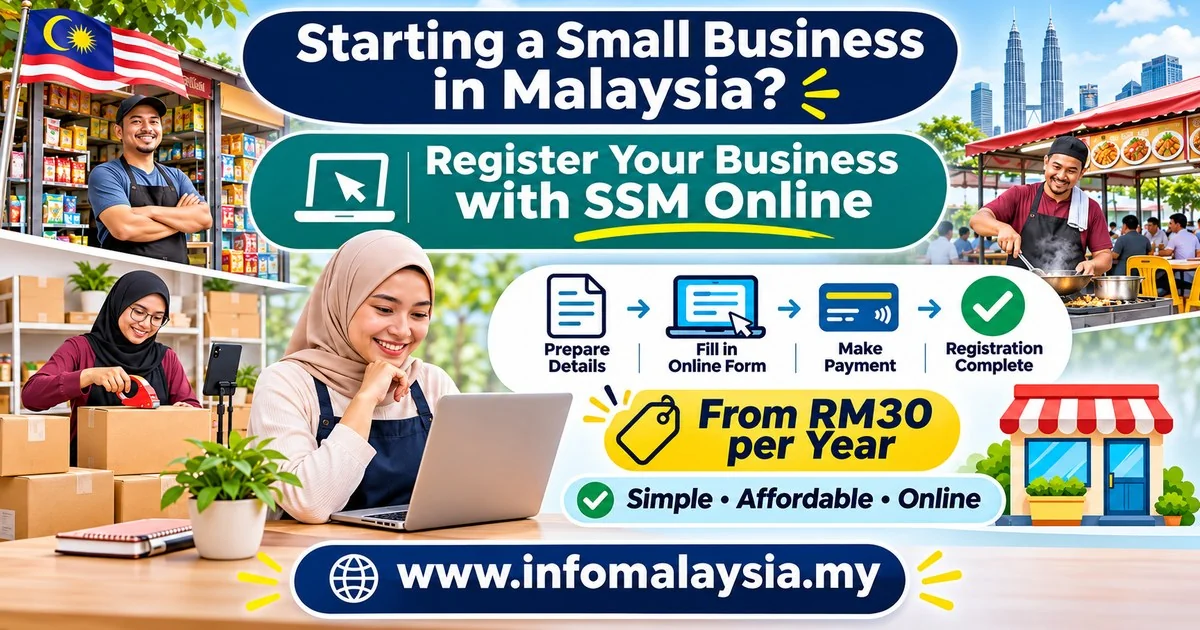
Are you planning to open a small shop, restaurant, food stall, online store or home-based business in Malaysia? One of the most important steps in starting your business is registering it with the Companies Commission of Malaysia (Suruhanjaya Syarikat Malaysia), commonly known as SSM.
For many small and micro-business owners, registering a sole proprietorship is a simple and affordable way to start operating a formal business. Registration fees start from as little as RM30 per year.
Business registration can be completed online through the SSM4U portal using the EzBiz Online service.
Who Should Register a Small Business with SSM?
Business registration is relevant to many types of small businesses, including:
- Small restaurants, cafes and food stalls.
- Grocery shops and convenience stores.
- Online sellers on Shopee, Lazada and TikTok Shop.
- Home-based food and bakery businesses.
- Clothing shops and boutiques.
- Barbershops and beauty salons.
- Freelancers and independent service providers.
- Mobile food trucks and small catering businesses.
- Small-scale manufacturers and handicraft businesses.
- Website developers and digital service providers.
Why Should You Register Your Business?
Registering your business provides several advantages:
- Establishes a formal business identity.
- Helps improve customer confidence.
- Provides supporting documentation when opening a business bank account.
- Helps you apply for merchant payment gateways and business DuitNow QR services.
- Supports applications for eligible government grants and business financing.
- Makes it easier to deal with suppliers and corporate customers.
- Helps you comply with applicable business registration requirements.
Registration does not automatically guarantee approval for bank accounts, financing, grants or other services. Each provider may have additional requirements.
Which Type of Business Should You Register?
For small business owners, two common registration options are sole proprietorship and partnership.
1. Sole Proprietorship (Milikan Tunggal)
A business owned by one individual. This structure is often suitable for individuals starting a small shop, food stall, online store or freelance business.
2. Partnership (Perkongsian)
A business owned by two or more individuals, with a maximum of 20 partners under this registration framework.
Unlike a limited liability company, sole proprietorships and ordinary partnerships generally do not provide separate limited liability protection to their owners.
How Much Does SSM Business Registration Cost?
| Registration Type | Fee |
|---|---|
| Sole proprietorship using personal name | RM30 per year |
| Sole proprietorship using a trade name | RM60 per year |
| Partnership using a trade name | RM60 per year |
| Additional business branch | RM5 per year per branch |
| Business information document | RM10 |
For example, if you want to operate a restaurant under a business name such as "Selera Utara Enterprise", the standard trade-name registration fee is RM60 per year, subject to name approval.
These fees cover SSM registration and related services only. Other licences and operating permits may involve separate charges.
Requirements for Online SSM Registration
Before registering, make sure you meet the following requirements:
- You are a Malaysian citizen or permanent resident.
- You are at least 18 years old.
- You have a valid identification document.
- You have a valid email address and telephone number.
- All owners or partners have verified EzBiz user accounts.
- Your proposed business activities comply with applicable laws.
This registration procedure applies to businesses under the Registration of Businesses Act 1956 in Peninsular Malaysia and the Federal Territories. Small business owners in Sabah and Sarawak should check the applicable local registration requirements.
Step-by-Step Guide to Registering Your Business Online
Step 1: Visit the Official SSM4U Portal
Visit the official Portal:SSM4U portal.
From 24 May 2026, access to EzBiz Online is provided through SSM4U.
Step 2: Create and Verify Your Account
Register an account if you are a new user. Complete the required identity verification and account activation process according to SSM's instructions.
Existing EzBiz users should follow the SSM4U account activation instructions where applicable.
Step 3: Access EzBiz Online
Log in to SSM4U and access the EzBiz Online service.
Navigate to My Business Services and select New Business Registration.
Step 4: Choose Your Business Name
Choose whether to register using your personal name or a proposed trade name.
Examples of trade names for small businesses include:
- Selera Utara Enterprise
- Azman Grocery
- Melati Homemade Bakery
- Seri Digital Solutions
Trade names are subject to SSM approval and availability. The examples above are illustrative only.
Step 5: Enter Your Business Information
Complete the registration form with the required information, including:
- Business name.
- Business commencement date.
- Business address.
- Business activities.
- Owner or partner details.
- Registration period.
- Branch information, if applicable.
Make sure your business activities accurately describe the products or services you provide.
Step 6: Make Payment
Review your application and complete the payment through the available payment methods, such as FPX online banking or credit card.
Step 7: Download Your SSM Certificate
Once your application has been approved, log in to the portal to download your business registration certificate.
Keep a digital copy and a printed copy for future business-related applications.
Do Small Businesses Need to Register Within 30 Days?
Under the Registration of Businesses Act 1956, businesses covered by the Act must be registered no later than 30 days after commencing business.
It is advisable to arrange your registration and any necessary operating licences before starting your business.
Is SSM Registration Enough to Open a Shop?
No. SSM registration and business operating licences are different requirements.
Depending on your business activities and location, you may also need:
- A local council business premises licence.
- A signboard licence.
- Food premises approvals.
- Food handler training and required vaccinations.
- Other industry-specific permits or approvals.
Restaurant owners, food stall operators and physical shop owners should contact their respective local authorities before commencing operations.
You can also visit MalaysiaBiz to find information about applicable business licensing requirements.
What Should You Do After Registering Your Business?
Once your business is registered, consider taking the following steps:
- Obtain the necessary operating licences.
- Open a dedicated business bank account.
- Set up DuitNow QR or an online payment gateway.
- Maintain proper records of sales and expenses.
- Check your applicable tax obligations.
- Promote your business through social media and online platforms.
- Renew your SSM registration before it expires.
Useful Digital Tools for Small Business Owners
Small business owners can also use digital applications to simplify their daily operations.
- MyPick.my – Create a digital QR menu and manage customer orders for restaurants, cafes and food businesses.
- toyyibPay – Explore online payment collection services for businesses.
Official Websites
- SSM4U – Online Business Registration
- Companies Commission of Malaysia (SSM)
- SSM EzBiz – Registration Fees and Official Guidelines
- MalaysiaBiz – Business Licensing Information
Conclusion
Starting a small business in Malaysia does not necessarily require a large investment. With SSM registration fees starting from RM30 per year, individuals can take an affordable first step towards establishing a formal business.
Whether you are planning to open a restaurant, grocery shop, online store or home-based business, registering your business and obtaining the necessary licences can help you build a stronger foundation for future growth.
Ready to start your business? Visit SSM4U to begin your online business registration.
Information last reviewed: November 2026. Registration procedures, fees and requirements are subject to changes by the relevant authorities.