Running a restaurant is not just about preparing delicious food. It also involves managing employees, taking customer orders, coordinating kitchen operations, controlling expenses and ensuring customer satisfaction.
An inefficient restaurant may experience unnecessary operating costs, long waiting times, incorrect orders and dissatisfied customers.
Fortunately, improving restaurant efficiency does not necessarily require expensive equipment or sophisticated systems. Here are ten practical ways restaurant owners can improve their daily operations.
1. Introduce a Digital QR Code Menu
Traditional printed menus require regular replacement whenever prices, food items or promotions change.
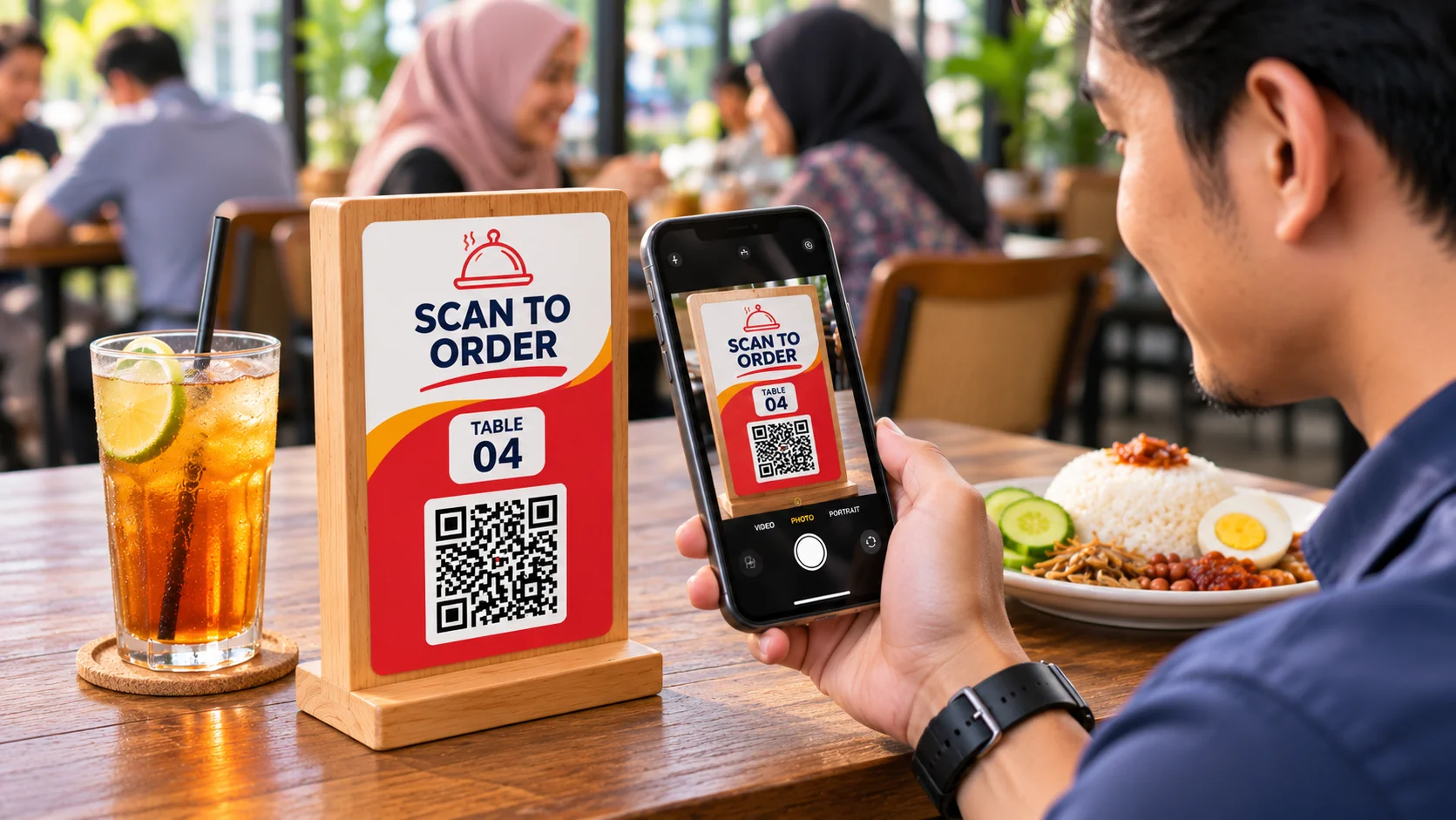
A digital QR code menu allows customers to view the restaurant's menu directly on their smartphones by scanning a QR code placed on their table.
Restaurant owners can also update prices, food descriptions and photographs without reprinting their menus.
Malaysian restaurant owners can use platforms such as MyPick.my to create their own digital QR code menu.
MyPick offers the following features:
- Free starter plan with up to five menu items.
- Printable table QR codes.
- Online dine-in and takeaway ordering.
- Food photographs and pricing management.
- Live kitchen and cashier order dashboards.
- Optional online payment through ToyyibPay.
- No application download required for customers.
- Menu updates without having to reprint table QR codes.
Restaurant owners can start with the free plan and upgrade whenever they require unlimited menu items.
Get your restaurant QR code menu: www.mypick.my
2. Allow Customers to Place Their Own Orders
During peak hours, customers may spend several minutes waiting for a waiter before they can place an order.
Allowing customers to submit orders directly from their smartphones can reduce waiting time and enable restaurant employees to focus on serving food, cleaning tables and assisting customers.
It can also reduce mistakes caused by incorrectly recorded verbal orders or unclear handwriting.
With a digital ordering platform such as MyPick.my, customers can:
- Scan the QR code at their table.
- Browse available food and beverages.
- Select their preferred menu items.
- Submit orders directly to the restaurant.
- Monitor their order status.
- Make online payments where available.
Restaurants should retain manual ordering options for customers who need assistance or prefer traditional service.
3. Improve Communication Between the Kitchen and Cashier
Poor communication between restaurant employees can result in missing orders, duplicated orders, incorrect food preparation and unnecessary delays.
A centralised digital ordering system allows kitchen staff and cashiers to monitor incoming orders through a shared platform.
For example, MyPick.my provides live order dashboards for kitchen and cashier operations, helping employees keep track of customer orders and their current status.
This can reduce the need for employees to repeatedly walk between the cashier, kitchen and customer tables to confirm orders.
Better coordination allows restaurant employees to concentrate on their respective responsibilities and improve overall service efficiency.
4. Simplify Your Restaurant Menu
Having too many menu items can increase ingredient costs, food waste and preparation time.
Restaurant owners should regularly review their menus and identify:
- Best-selling food and beverages.
- Items with high profit margins.
- Items that take too long to prepare.
- Items that are rarely ordered.
- Ingredients that frequently go unused.
A smaller, well-planned menu can make kitchen operations easier to manage while maintaining customer satisfaction.
Restaurant owners can also consider offering different menus during breakfast, lunch and dinner, depending on customer demand and ingredient availability.
5. Prepare Ingredients Before Peak Hours
Restaurant owners should identify their busiest operating hours and ensure sufficient preparation is completed beforehand.
Rather than waiting for customers to arrive before preparing every ingredient, kitchen employees can organise ingredients and prepare their workstations in advance while observing appropriate food safety and storage procedures.
Preparations may include:
- Washing and cutting vegetables.
- Preparing sauces and seasonings.
- Organising cooking ingredients.
- Checking kitchen equipment.
- Ensuring sufficient plates, cups and utensils.
- Preparing takeaway packaging.
Good preparation helps kitchen staff serve customers faster without compromising food quality and hygiene.
6. Introduce Cashless and Online Payments
Offering cashless payment options can make transactions more convenient and reduce the time spent handling cash and calculating change.
Restaurants in Malaysia can consider accepting various payment methods, including:
- DuitNow QR payments.
- Online banking through FPX.
- Debit and credit cards.
- Supported electronic wallets.
Restaurant owners interested in accepting online payments can register an account with ToyyibPay, a Malaysian online payment gateway.
Restaurant owners using MyPick.my can also connect their ToyyibPay accounts to enable supported online payment options for customers.
This integration allows restaurants to manage customer orders and online payments through a more organised digital workflow.
Register for an online payment gateway: Register with ToyyibPay
Payment gateway fees, settlement periods and registration requirements are subject to the payment provider's applicable terms and conditions.
7. Monitor Inventory and Reduce Food Waste
Food waste directly affects restaurant profitability. Ingredients that are purchased but never used represent an unnecessary business expense.
Restaurant owners should maintain records of ingredients purchased, consumed and discarded.
Some practical inventory management practices include:
- Monitoring ingredient expiry dates.
- Using older stock first where appropriate.
- Avoiding excessive purchases of perishable ingredients.
- Monitoring daily ingredient consumption.
- Maintaining consistent food portion sizes.
- Adjusting purchases according to customer demand.
Even a small reduction in daily food waste can contribute to meaningful savings over the course of a year.
8. Schedule Employees According to Customer Demand
Not every operating hour requires the same number of employees.
Restaurant owners should analyse customer traffic and arrange employee schedules accordingly.
More employees may be required during breakfast, lunch, dinner, weekends and public holidays, while fewer employees may be sufficient during quieter periods.
Introducing digital menus, self-service ordering and online payments can also reduce repetitive administrative tasks performed by restaurant employees.
Instead of spending most of their time recording orders and confirming payments, employees can concentrate on food preparation, customer service and maintaining restaurant cleanliness.
Effective scheduling helps control labour costs without compromising service quality, employee welfare or compliance with employment requirements.
9. Standardise Daily Restaurant Operations
Every employee should understand their responsibilities and the correct procedures for completing daily tasks.
Restaurant owners should establish simple standard operating procedures (SOPs) covering:
- Restaurant opening and closing procedures.
- Customer service.
- Food preparation.
- Order management.
- Cleaning and hygiene.
- Payment handling.
- Inventory management.
- Customer complaints.
Standardised procedures can reduce confusion, minimise mistakes and help new employees adapt more quickly.
Having clear procedures also allows restaurant operations to continue smoothly even when the owner or manager is not physically present.
10. Review Sales and Customer Feedback Regularly
Restaurant owners should not rely solely on assumptions when making business decisions.
Regularly reviewing sales records and customer feedback can help identify popular products, operational weaknesses and opportunities for improvement.
Restaurant owners should consider monitoring the following performance indicators:
- Daily and monthly sales revenue.
- Number of customer orders.
- Average customer spending.
- Average customer waiting time.
- Most and least popular menu items.
- Number of incorrect or cancelled orders.
- Food waste and ingredient costs.
- Customer complaints and satisfaction.
By monitoring these indicators, restaurant owners can determine whether changes to their operations are producing positive results.
Conclusion
Improving restaurant efficiency does not necessarily mean hiring more employees or purchasing expensive equipment.
By combining effective management practices with affordable digital technology, restaurant owners can reduce unnecessary expenses, improve productivity and provide a better customer experience.
Digital menus, self-service ordering, centralised kitchen dashboards and online payments are among the practical technologies that small and medium-sized restaurants can adopt without making substantial initial investments.
Small improvements in daily operations can make a meaningful difference to the long-term sustainability and profitability of a restaurant.
Useful Websites for Restaurant Owners
- MyPick.my - Create a free digital QR code menu and manage customer orders.
- ToyyibPay - Register for an online payment gateway for your business.
Disclosure: MyPick.my is a related project developed by the publisher of InfoMalaysia.my. This article also contains referral links through which the publisher may receive referral benefits.